

One of the most counterintuitive facts about decentralized finance is that a safer-looking transaction can still be a dangerous one. A polished interface, a familiar token, and a successful wallet simulation do not eliminate the risks created by smart contracts, bridges, unlimited approvals, or compromised websites. They only improve the information available before a user signs. That distinction is central to understanding Rabby Wallet and the broader evolution of DeFi security.
Early cryptocurrency wallets largely treated signing as a binary action: a website requested permission, the wallet displayed a transaction, and the user decided whether to approve it. Modern DeFi is more complicated. A single click may call several contracts, move assets through a router, grant token spending authority, and depend on liquidity located on another network. A wallet that helps users inspect those steps can reduce avoidable mistakes, but it cannot make an untrusted protocol trustworthy. The practical question is therefore not whether a wallet is “safe,” but which risks it can expose, constrain, or leave entirely to the user.
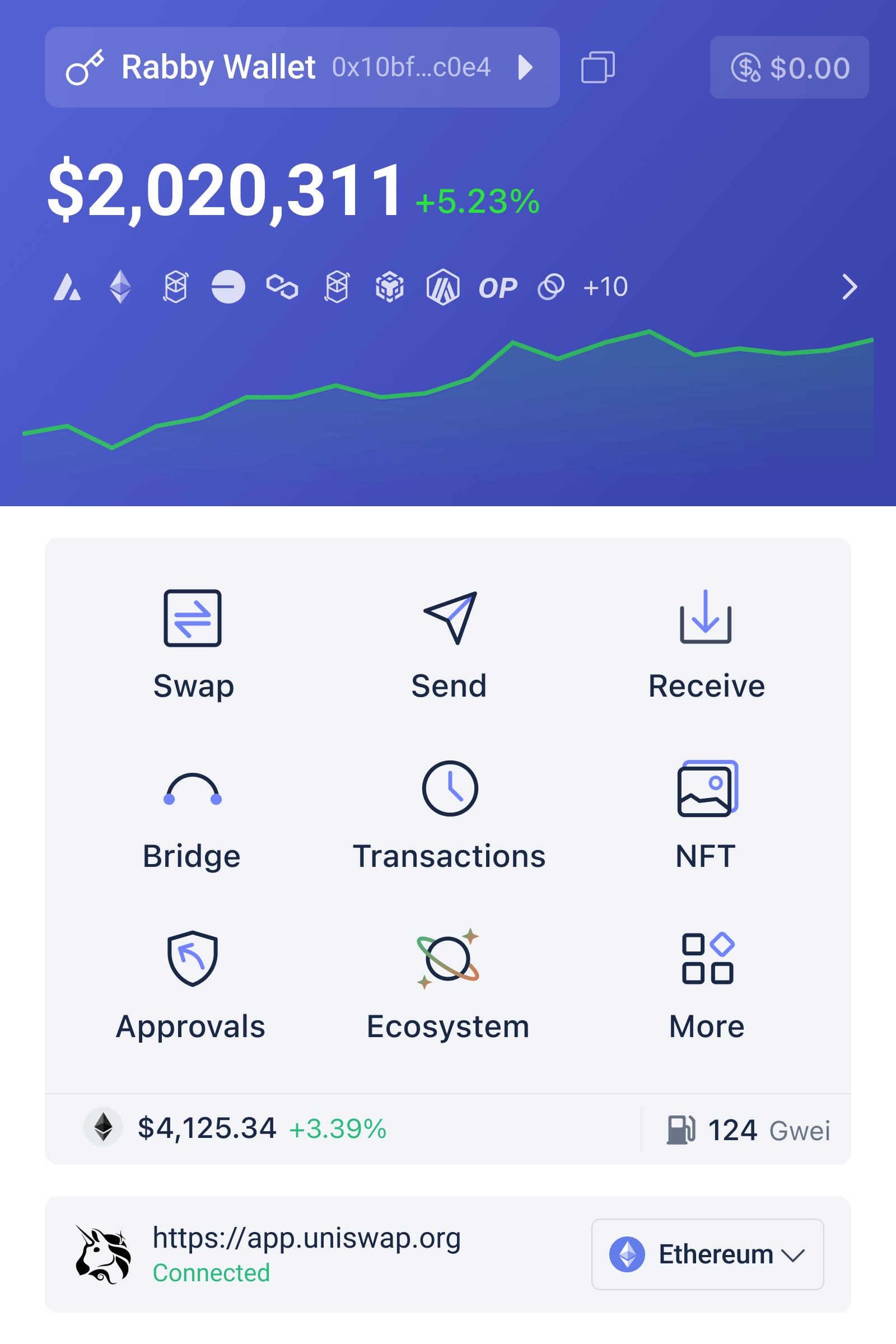
Myth: a wallet protects users from every DeFi attack
Rabby is best understood as a transaction-awareness layer for users interacting with decentralized applications. Its value comes from making transaction context easier to inspect before signing. That may include the network involved, the assets expected to move, the contract interaction being requested, and warnings associated with certain approvals or destinations. These capabilities are useful because many losses occur not through an exotic cryptographic failure, but through a user authorizing an action whose consequences were not understood.
Yet transaction analysis has a boundary. A wallet can often identify that a contract requests a token approval; it cannot guarantee that the contract will behave honestly in every future state. It may simulate an action successfully while the protocol remains exposed to governance abuse, an economic exploit, a compromised administrator key, or a later change in contract behavior. Simulation is evidence about a proposed execution under particular conditions, not an insurance policy.
This is the first misconception worth correcting: security warnings are decision support, not a substitute for judgment. A warning that does not appear is not proof of safety, and a warning that does appear is not always proof of malicious intent. Detection systems operate with incomplete information. They can produce false positives, miss novel attacks, or fail to understand risks that depend on off-chain events. The strongest workflow combines wallet-level analysis with independent checks of the protocol, domain, contract address, and intended transaction.
Why cross-chain swaps make the problem harder
A cross-chain swap is not merely a normal swap performed twice. It is a coordinated process involving different blockchains, separate states, and often an intermediary such as a bridge, solver, liquidity provider, or cross-chain messaging system. The user may begin with an asset on one network and receive another asset on a second network, while the interface hides much of the infrastructure connecting those steps.
That abstraction is convenient, but it creates a crucial trade-off. The more complexity an application compresses into one button, the less obvious the intermediate trust assumptions may become. A cross-chain route can involve a token approval on the source chain, a swap through a decentralized exchange, a message or asset transfer, and a final delivery transaction. Failure at any stage may produce delay, partial completion, unexpected fees, or the need for manual recovery.
For a US-based DeFi user, network choice also has practical consequences beyond price. Gas fees may vary sharply between Ethereum and lower-cost networks. Some assets have similar tickers but different contract addresses. A token received on one chain may not be usable by the application the user intended to access. In addition, the legal and tax treatment of digital-asset activity can depend on the transaction history and the user’s circumstances. A wallet can help display network and asset information, but it does not provide tax advice or determine whether a transaction is appropriate under US rules.
The hidden distinction between custody and authorization
Many users think of a wallet as a container holding coins. In DeFi, it is more accurate to view it as a key-management and authorization tool. The wallet controls private keys, but smart contracts control assets once the user grants them permission to spend those assets. An approval can remain active after a swap is complete, sometimes for an amount that exceeds the immediate trade. If the approved contract is later exploited or its control changes, the approval may become a liability.
This is why a successful swap does not necessarily mean the interaction is finished. After using a new protocol, users should consider whether approvals remain necessary and whether the contract is still trusted. Revoking permissions can reduce exposure, although revocation itself requires an on-chain transaction and may involve a fee. The correct balance depends on how frequently the user uses a protocol and how much operational friction they are willing to accept.
What Rabby can improve—and what it cannot
For users considering the rabby wallet extension, the most useful expectation is modest and specific: it can make the signing decision more legible. Installation should begin from a source the user has independently verified, and the extension should be checked for the correct publisher and permissions. A wallet extension is itself a security-sensitive piece of software; downloading a fake copy defeats the purpose of using a security-oriented interface.
Rabby’s practical strengths are most relevant before confirmation. Network-aware prompts can reduce the chance of signing on the wrong chain. Transaction previews can help a user compare the intended action with the actual call. Warnings and simulations may reveal suspicious transfers, unusual approvals, or a mismatch between what a website claims will happen and what the transaction requests. These are meaningful improvements over blindly approving opaque data.
The limitation is that the wallet operates at the edge of a much larger system. It does not control the website’s front end, the protocol’s governance, the bridge’s validators, the liquidity provider’s solvency, or the user’s computer. A malicious browser extension, clipboard hijacker, phishing page, or stolen seed phrase can bypass many transaction-level safeguards. Hardware wallets can strengthen key protection, but even a hardware wallet will sign a harmful transaction if the user confirms it.
The sharper mental model is a series of defensive layers. First, verify the site and domain. Second, confirm the network and recipient. Third, inspect the requested assets and allowances. Fourth, evaluate the protocol and route, especially when another chain or bridge is involved. Fifth, sign only when the economic outcome and the authorization scope make sense. Rabby can strengthen the third and, to some extent, the second and fifth layers. It does not replace the first or fourth.
A reusable checklist for cross-chain transactions
Before approving a cross-chain swap, start with the destination rather than the headline exchange rate. Ask which asset will arrive, on which chain, and whether that asset is the native token or a wrapped representation. Then inspect the route. Is there a bridge or messaging step? Does the application require an approval, and is the allowance limited to the amount needed? If the interface shows a quote that appears unusually favorable, consider whether slippage, bridge fees, liquidity constraints, or delayed settlement explain the difference.
Next, separate operational risk from protocol risk. Operational risk includes choosing the wrong network, entering a fake URL, or sending funds to an incorrect address. Protocol risk includes a vulnerable contract, a bridge failure, or an oracle problem. These risks require different responses. Careful transaction review can reduce operational mistakes, while protocol risk demands research into audits, contract history, upgrade authority, liquidity, and the consequences of failure. No single warning panel can summarize all of those dimensions reliably.
Small test transactions are often useful when moving funds to an unfamiliar chain, but they have limits. A small transaction can confirm that an address and network are correct; it cannot prove that a protocol is secure or that a larger transaction will receive the same execution price. Likewise, an audit may identify code-level issues without guaranteeing economic safety. Evidence should be treated as cumulative and conditional rather than definitive.
What matters next for DeFi security
The likely direction of wallet security is not perfect prediction but better translation. DeFi protocols expose increasingly complex actions, while users still make decisions through short prompts and buttons. Tools that translate contract calls into understandable consequences can improve safety if their warnings are accurate, explainable, and resistant to alert fatigue. If every interaction produces a dramatic warning, users may learn to dismiss warnings indiscriminately.
Cross-chain systems will continue to test this approach because their risk is distributed. A route may be secure on the source chain but dependent on a weaker bridge, an opaque solver, or a destination contract with different assumptions. The important signal to watch is therefore not simply whether a wallet adds another supported network. It is whether the interface helps users understand the full route, the authority behind each step, and what happens when one component fails.
For now, the disciplined conclusion is straightforward. A wallet such as Rabby can make DeFi interactions more inspectable, which is valuable in an environment where authorization is often more dangerous than the visible trade. But inspection is not verification, and convenience is not custody. The safest cross-chain user is not the one who clicks fastest; it is the one who knows which parts of the transaction are visible, which trust assumptions remain hidden, and what would happen if the route failed.
Frequently asked questions
Does Rabby Wallet eliminate the need to research a DeFi protocol?
No. Wallet warnings, simulations, and transaction previews can improve context and identify some suspicious behavior, but they cannot establish that a protocol will remain honest, solvent, or technically secure. Users should still verify the official site, contract addresses, governance structure, upgrade permissions, and the risks of the specific application.
Are cross-chain swaps riskier than swaps on one blockchain?
They can be, because they may add bridge, messaging, liquidity, and settlement dependencies. The risk is not automatically higher in every case, but the failure surface is broader. Users should confirm the source and destination networks, the exact received asset, fees, slippage, approval scope, and the mechanism used to move value between chains.
Should DeFi users revoke approvals after every transaction?
Not necessarily. Revoking unused approvals can reduce exposure, especially for unfamiliar or high-risk contracts, but revocation costs gas and adds operational friction. A reasonable approach is to review approvals periodically, limit allowances when practical, and treat long-lived approvals to contracts that are no longer used as candidates for removal.